



Tous les produits
Personne à contacter :
Devin
Numéro de téléphone :
+86-16663019390
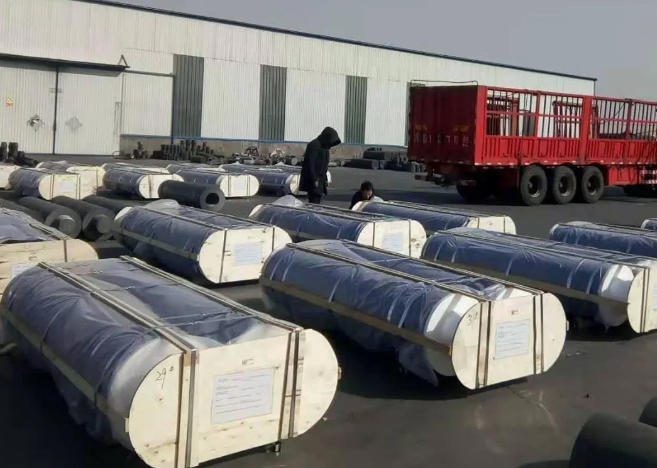
Électrodes graphite HP Électrodes graphite haute puissance pour la production d'acier
| Lieu d'origine | Chine |
|---|---|
| Nom de marque | Chaoyo |
| Certification | QA/QC |
| Numéro de modèle | Électrode en graphite |
| Quantité de commande min | 25 tonnes |
| Détails d'emballage | Palette en bois |
| Délai de livraison | 10-15 jours |
| Conditions de paiement | TT/LC |
| Capacité d'approvisionnement | 3000 tonnes métriques/tonnes métriques par mois |
Détails sur le produit
| Application | EAF/LF | Diamètre | 550 mm |
|---|---|---|---|
| Longueur | longueur 1800mm | Résistance (μΩ.m) | ≤6.5 |
| Densité apparente (g/cm3) | ≥1,65 | Extension thermique | ≤ 2.4 |
| Résistance à la flexion (N/m2) | ≥10.5 | Taper | Bloc d'électrode |
| Grade | UHP (puissance extrêmement élevée) | Connecter | 4TPI |
Description de produit
Électrodes en graphite HP Électrodes en graphite haute puissance pour la production d'acier
Description:
Les électrodes en graphite sont un matériau réfractaire conducteur en graphite résistant aux hautes températures utilisé dans l'industrie métallurgique. Les électrodes en graphite sont fabriquées à partir de coke de pétrole, de coke bitumineux comme agrégats, de brai de houille comme liants, après calcination, broyage et mouture des matières premières, dosage, pétrissage, moulage, torréfaction, imprégnation, graphitisation et usinage, qui sont également connues sous le nom d'électrodes en graphite artificiel afin de les distinguer des électrodes en graphite naturel fabriquées à partir de graphite naturel.
> Soyez prudent lors du transport et de l'empilage des électrodes avec un chariot élévateur et évitez les collisions. Une seule couche de marchandises à la fois ; faites attention à l'équilibre et à l'alignement et évitez les chutes ou les cassures.
> Lors du chargement et du déchargement avec un chariot élévateur, un câble métallique doit être utilisé et une bande d'acier ne peut pas être utilisée directement pour saisir les électrodes.
> L'électrode doit être stockée dans un endroit propre et sec. Lors de l'empilage en extérieur, elle doit être recouverte d'une bâche imperméable et le nombre de couches d'empilage ne doit pas dépasser quatre.
> Lors de l'utilisation des électrodes, des outils spéciaux doivent être utilisés pour couper la bande d'acier, et une grue ne doit pas être utilisée pour éviter l'éclatement.
> Une boule en acier, une brosse métallique ou un tissu émeri ne sont pas autorisés pour le nettoyage du filetage de l'électrode, mais de l'air comprimé exempt d'huile et d'eau est disponible.
> Utilisez un crochet résilient rotatif et placez un coussin de levage souple sous le joint de l'électrode pour éviter la rupture du filetage.
> Soulevez l'électrode jusqu'au four à l'aide d'un palan avec des crochets résilients, trouvez le centre et descendez lentement, vissez et serrez avec un anneau.
> Si les deux pôles des deux électrodes ne sont pas en contact ou sont en contact avec une surpression, cela peut avoir un mauvais effet.
> Afin d'éviter la rupture de l'électrode, placez les gros matériaux en bas et les petits matériaux en haut.
Spécification
|
|||||||||||||||||||||||||||||||||||||||||||||||||||||||||||||||||||||||||||||||||||||||||||||||||||||||||||||||||||||||||||||||||||||||||||||||||||||||||||

Avantage produit
* Rendement élevé,garantie de la date de livraison
Production annuelle : 80 000 tonnes
* Faible résistivité
* Bonne conductivité thermique et électrique
* Faible teneur en cendres
* Faible résistivité
* Bonne conductivité thermique et électrique
* Faible teneur en cendres
(UHP : 0,3 % max ; HP : 0,2 % max ; RP : 0,5 % max)
* Faible consommation d'électrodes en graphite.
* Bonne résistance à l'oxydation
* La teneur en coke d'aiguille représente 80 %,
* Faible consommation d'électrodes en graphite.
* Bonne résistance à l'oxydation
* La teneur en coke d'aiguille représente 80 %,
Importé du Japon et de Corée du Sud
Application
1. Four à arc électrique pour la sidérurgie.
1. Four à arc électrique pour la sidérurgie.
2. Fours de chauffage de minerai.
3. Fours à résistance.
Assurance et contrôle qualité
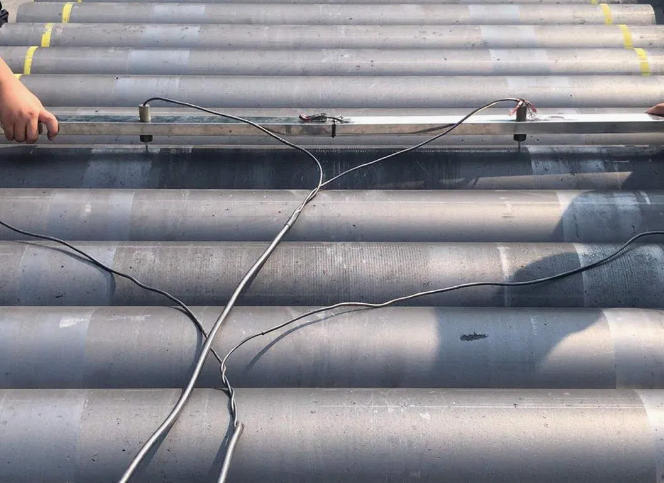
· Laboratoire certifié national
· Instruments de test clés, notamment : résistivité spécifique, densimètre, duromètre, appareil de mesure de la résistance à la flexion, analyseur de cendres, analyseur de CTE, etc.
· Étalonnage des instruments à temps
· Tests de propriétés sur site, notamment :
L-CTE, C-CTE
Résistivité spécifique, densité apparente,
Résistance à la flexion, teneur en cendres, module d'élasticité
Application de production :
- Application principale dans les fours à arc électrique (EAF) pour la sidérurgie (représentant plus de 70 % de la consommation mondiale) : Conduire l'électricité pour générer des arcs électriques à haute température afin de faire fondre la ferraille, produisant de l'acier de construction, de l'acier automobile et de l'acier spécial
- Faciliter la fusion des métaux non ferreux : Fondre des métaux tels que le cuivre, le nickel et le plomb ; également utilisé dans le refusion sous vide des métaux réfractaires comme le titane pour obtenir une purification et une composition uniforme
- Produire des matériaux industriels clés : Fabriquer du silicium de qualité métallurgique, du polysilicium (pour l'énergie solaire/les semi-conducteurs), ainsi que du phosphore et des ferroalliages dans les fours à arc submergé
- Servir l'industrie électrochimique : Agir comme anodes dans le raffinage électrolytique des métaux comme le cuivre et l'or pour la purification, ou comme collecteurs de courant dans les piles à combustible pour assurer une transmission d'électricité stable
- Soutenir les industries spécialisées : Aider à la production à haute température de verre/céramique (réduisant la consommation d'énergie) ; également utilisé dans les expériences de laboratoire à haute température et l'analyse électrochimique
produits recommandés