



Tous les produits
Personne à contacter :
Devin
Numéro de téléphone :
+86-16663019390
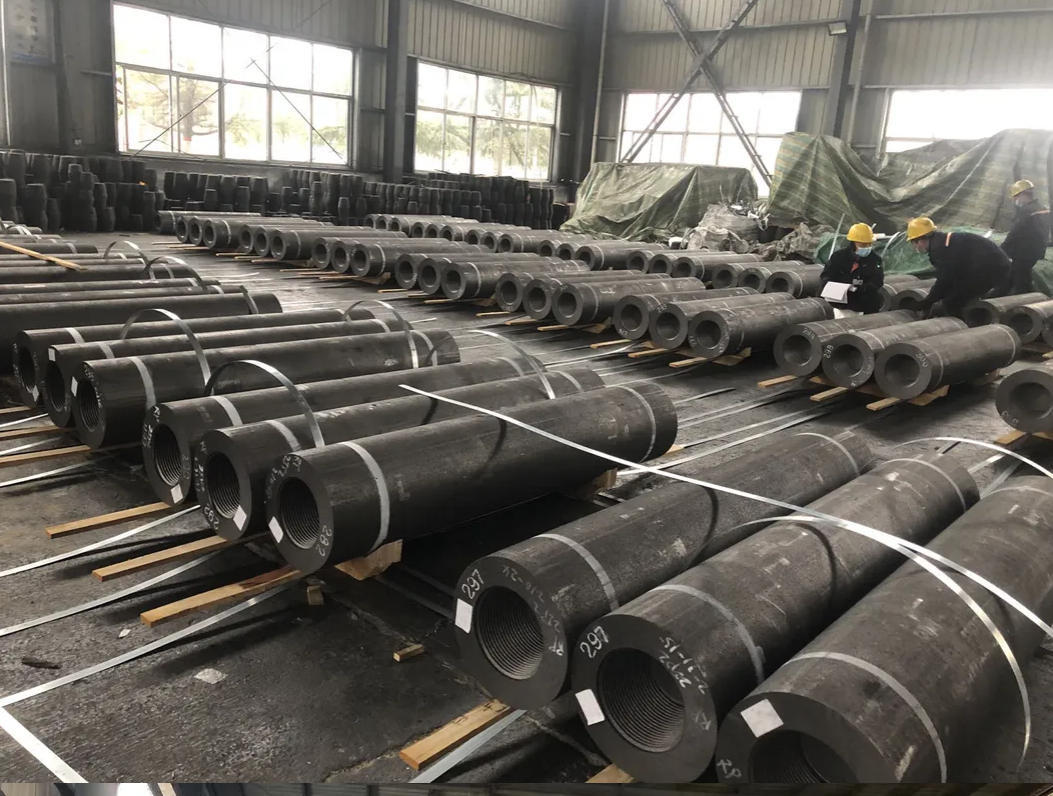
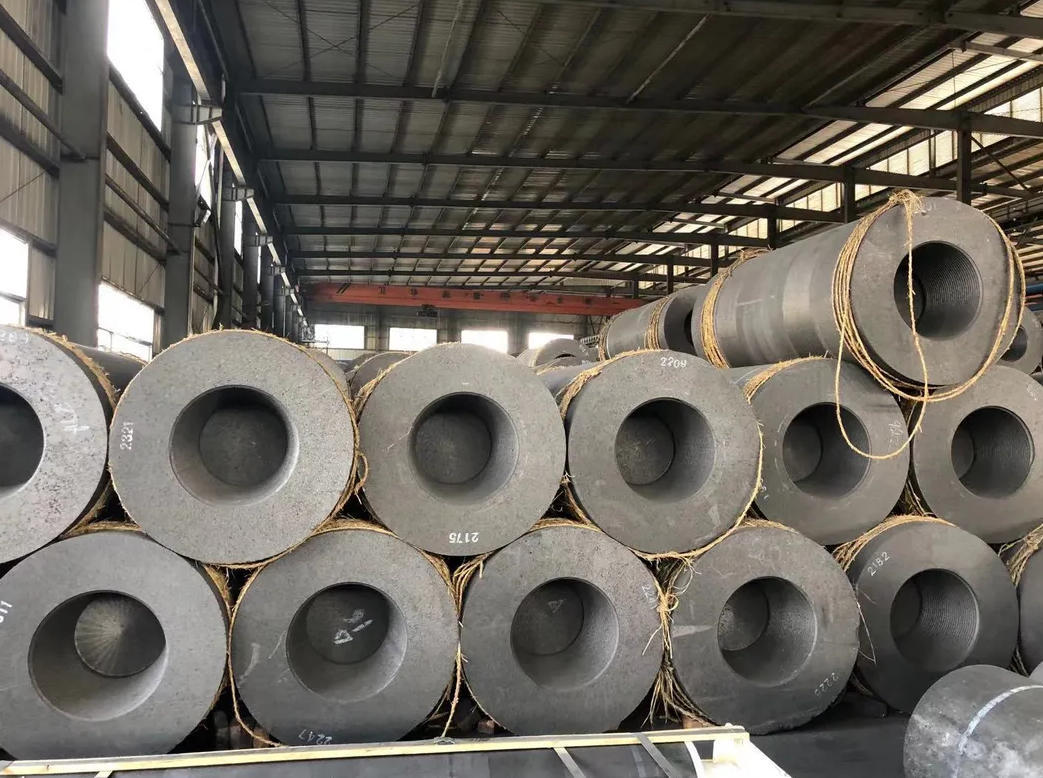
24 pouces UHP électrode de graphite prix Eaf aciérie
| Lieu d'origine | Chine |
|---|---|
| Nom de marque | Chaoyo |
| Certification | QA/QC |
| Numéro de modèle | Électrode en graphite |
| Quantité de commande min | 25 tonnes |
| Détails d'emballage | Palette en bois |
| Délai de livraison | 10-15 jours |
| Conditions de paiement | TT/LC |
| Capacité d'approvisionnement | 3000 tonnes métriques/tonnes métriques par mois |
Détails sur le produit
| Application | EAF/LF | Diamètre | 550 mm |
|---|---|---|---|
| Longueur | longueur 1800mm | Résistance (μΩ.m) | ≤6.5 |
| Densité apparente (g/cm3) | ≥1,65 | Extension thermique | ≤ 2.4 |
| Résistance à la flexion (N/m2) | ≥10.5 | Taper | Bloc d'électrode |
| Grade | UHP (puissance extrêmement élevée) | Connecter | 4TPI |
Description de produit
Prix de l'électrode en graphite UHP de 24 pouces pour la sidérurgie par four à arc électrique
Description :
Les matières premières des électrodes en graphite utilisent du coke de pétrole et du coke de brai nationaux, ainsi que du coke d'aiguille japonais importé. Les électrodes en graphite de qualité HP contiennent 30 % de coke d'aiguille importé. Les électrodes en graphite UHP contiennent plus de 80 % de coke d'aiguille importé. Elles sont largement utilisées dans les fours à arc électrique (FAE), les fours à poche (LF) pour la production d'acier allié, de métaux et de matériaux non métalliques. Elles se caractérisent par une faible résistivité, une bonne conductivité électrique et thermique, une haute résistance à l'oxydation et aux chocs thermiques, une haute résistance mécanique, etc.
Spécification
| Données techniques des électrodes en graphite | |||||||
| Spécification | RP | HP | UHP | ||||
| φ200-300 | φ350-600 | φ200-400 | φ450-600 | φ250-400 | φ450-600 | ||
| Résistivité électrique μ Ω.m ≤ |
Électrode | 8.5 | 6.5 | 5.5 | |||
| Mamelon | 6.5 | 5.5 | 4.5 | ||||
| Masse volumique apparente g/cm3 ≥ |
Électrode | 1.53 | 1.52 | 1.62 | 1.6 | 1.67 | 1.66 |
| Mamelon | 1.69 | 1.73 | 1.75 | ||||
| Résistance à la flexion ≥Mpa |
Électrode | 8.5 | 7 | 10.5 | 9.8 | 11 | |
| Mamelon | 15 | 16 | 20 | ||||
| Module d'élasticité Gpa ≤ |
Électrode | 9.3 | 12 | 14 | |||
| Mamelon | 14 | 16 | 18 | ||||
| Cendres % ≤ |
Électrode | 0.5 | 0.3 | 0.3 | |||
| Mamelon | 0.5 | 0.3 | 0.3 | ||||
| CTE (100ºC-600ºC) 10 -6/ºC ≤ |
Électrode | 2.9 | 2.4 | 1.5 | |||
| Mamelon | 2.7 | 2.2 | 1.4 | ||||
Application:
Les électrodes en graphite sont principalement utilisées dans les fours à poche, la sidérurgie par four à arc électrique, les fours à phosphore jaune, les fours à silicium industriel ou la fusion du cuivre. Ce sont actuellement les seuls produits disponibles qui possèdent des niveaux élevés de conductivité électrique et la capacité de supporter les niveaux extrêmement élevés de chaleur générés dans cet environnement exigeant. Le coke d'aiguille de haute qualité dans les électrodes en graphite HP et UHP garantit une application parfaite de l'électrode. Les électrodes en graphite sont également utilisées pour affiner l'acier dans les fours à poche et dans d'autres procédés de fusion.
Propriétés :
1. Bonne conductivité électrique.
2. Forte résistance aux chocs thermiques.
3. Haute résistance mécanique.
Variété :
1. RP (Puissance Régulière)
2. HP (Haute Puissance)
3. UHP (Ultra Haute Puissance)
4. RPI (Puissance Régulière Imprégnée)
(Remarque : Toutes les électrodes en graphite sont équipées de mamelons coniques

Résistance exceptionnelle aux hautes températures et stabilité thermique
Les électrodes en graphite offrent des performances inégalées à haute température, avec une température de sublimation de 3650 à 3697 °C, permettant un fonctionnement stable au-dessus de 2500 °C, dépassant de loin les limites de résistance à la chaleur des électrodes métalliques. Leur coefficient de dilatation thermique ultra-faible (seulement 1/40 de celui de l'acier) leur confère une excellente résistance aux chocs thermiques, évitant les fissures lors des variations rapides de température dans les procédés de fusion ou les démarrages fréquents d'équipement. Les matières premières de coke d'aiguille de première qualité optimisent leur structure cristalline, améliorant la stabilité et la durée de vie dans les applications à ultra-haute puissance. Dans la sidérurgie par four à arc électrique, elles maintiennent leur intégrité structurelle à des températures d'arc de 3000 °C, tandis que dans les fours d'étirage de silicium, elles assurent un contrôle précis de la température, augmentant le rendement en cristaux. Cette fiabilité minimise les temps d'arrêt, améliore la continuité de la production et offre une valeur à long terme pour les procédés métallurgiques et industriels à haute température.
Conductivité électrique supérieure et efficacité énergétique
Les électrodes en graphite présentent une conductivité électrique exceptionnelle, due à leur structure cristalline hexagonale avec des électrons libres, ce qui se traduit par une résistivité ultra-faible (jusqu'à 5,5 μΩ·m pour les qualités supérieures). Cela minimise les pertes de puissance lors de la transmission du courant, réduisant considérablement la consommation d'énergie. Dans la sidérurgie par four à arc électrique, des données pratiques montrent qu'elles réduisent la consommation d'énergie unitaire de 15 % et raccourcissent le temps de fusion de 20 %, ce qui diminue les coûts par tonne d'acier. Leur excellente conductivité thermique (100 à 150 W/(m·K)) dissipe la chaleur efficacement, évitant les surchauffes locales et prolongeant la durée de vie. Contrairement aux électrodes métalliques qui se dégradent à des courants élevés, le graphite maintient une conductivité stable à long terme, réduisant les remplacements et la maintenance. Conformément aux objectifs mondiaux de décarbonisation, elles constituent le choix idéal d'économie d'énergie pour la transformation industrielle verte.
Assurance et contrôle qualité
· Laboratoire national certifié
· Instruments de test clés, notamment : résistivité spécifique, densimètre, mesureur de module d'élasticité, inspecteur de résistance à la flexion, analyseur de cendres, analyseur de CTE, etc.
· Étalonnage des instruments en temps voulu
· Tests de propriétés sur site, notamment :
L-CTE, C-CTE
Résistivité spécifique, masse volumique apparente,
Résistance à la flexion, teneur en cendres, module d'élasticité
Application de production :
- Application principale dans la sidérurgie par four à arc électrique (FAE) (représentant plus de 70 % de la consommation mondiale) : Conduire l'électricité pour générer des arcs électriques à haute température afin de faire fondre la ferraille, produisant de l'acier de construction, de l'acier automobile et de l'acier spécial
- Faciliter la fusion des métaux non ferreux : Fondre des métaux tels que le cuivre, le nickel et le plomb ; également utilisés dans le refusion sous vide des métaux réfractaires comme le titane pour obtenir une purification et une composition uniforme
- Produire des matériaux industriels clés : Fabriquer du silicium de qualité métallurgique, du polysilicium (pour l'énergie solaire/les semi-conducteurs), ainsi que du phosphore et des ferroalliages dans des fours à arc submergé
- Servir l'industrie électrochimique : Agir comme anodes dans le raffinage électrolytique des métaux comme le cuivre et l'or pour la purification, ou comme collecteurs de courant dans les piles à combustible pour assurer une transmission d'électricité stable
- Soutenir les industries spécialisées : Aider à la production à haute température de verre/céramique (réduisant la consommation d'énergie) ; également utilisés dans les expériences à haute température en laboratoire et l'analyse électrochimique
produits recommandés